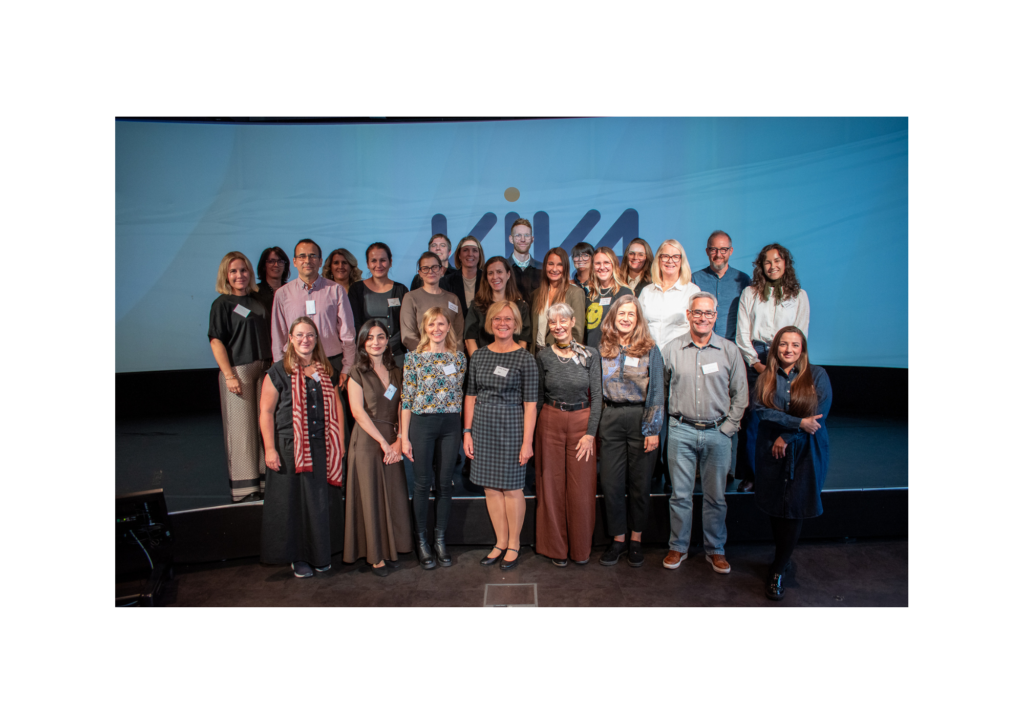
Six regions, one shared ambition: VIVA launches to strengthen European innovation

Six regions across Northern and Eastern Europe are joining forces through VIVA to help promising innovations move towards implementation and scale, while opening new pathways for knowledge, expertise and opportunities to travel across regional borders. The four-year Horizon Europe initiative has officially launched, bringing its consortium together in Halden, Norway, on 15–16 September 2026 to …

Six regions, one shared ambition: VIVA launches to strengthen European innovation Read More »
AI is used mainly for searching and creating content

Responses from the Bulgarian AISMark survey show that AI is already a general-purpose assistant, but its use for specialised marketing work remains less common. As part of the AISMark project, Net-Zero Lab along with the Faculty of Economics and Business Administration at Sofia University surveyed 121 students, academic staff and professionals in May 2026. Information …

AI is used mainly for searching and creating content Read More »

The Coal Gap and its implications for Bulgaria 

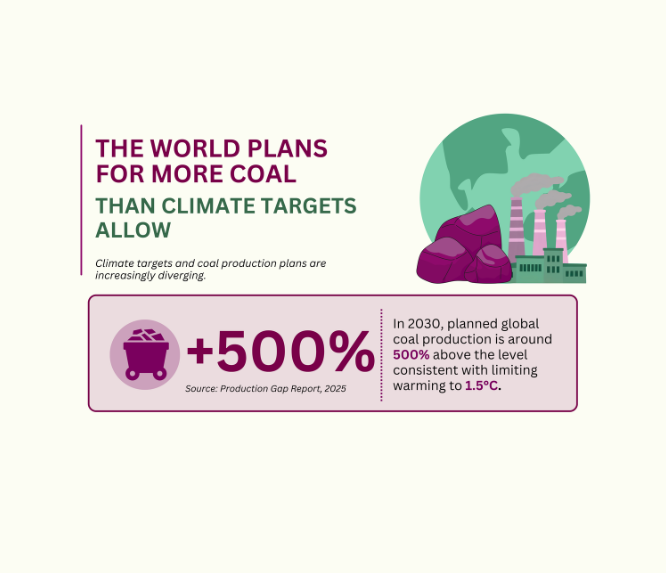
Despite increasingly ambitious climate commitments, projected coal production worldwide remains far above the levels consistent with international climate goals. This mismatch, known as the coal gap, is derived from the broader production gap framework and highlights the challenge of aligning coal production with pathways that limit global warming to well below 2°C and pursue efforts to keep it within 1.5°C. The 2025 Production …

The Coal Gap and its implications for Bulgaria  Read More »

Is natural gas really a “bridge fuel” for Bulgaria, or does it primarily expose the country to price volatility originating from European gas markets? 

Natural gas has long been presented as the fuel that could bridge Europe’s transition from coal to a low-carbon electricity system. Compared with coal, it produces fewer carbon dioxide emissions, gas-fired power plants provide the flexibility needed to balance increasingly variable renewable generation, and Europe entered the energy transition with an extensive gas transmission and …

Is natural gas really a “bridge fuel” for Bulgaria, or does it primarily expose the country to price volatility originating from European gas markets?  Read More »

Does Renewable Energy Drive Decarbonization? Bulgaria’s Performance in the EU Context (2015–2024) 

The transformation of the European Union’s power sector over the last decade has been driven by two interconnected processes: the expansion of renewable energy sources (RES) and the reduction of carbon-intensive electricity generation. While these developments are often discussed together, an important question remains: to what extent can the decline in carbon intensity be attributed to …

Does Renewable Energy Drive Decarbonization? Bulgaria’s Performance in the EU Context (2015–2024)  Read More »

Positive attitudes and frequent use make AI part of everyday life

The Erasmus+ project AISMark – AI-Driven Sustainable Marketing: Transforming Higher Education for a Greener Digital Future – examines how universities can combine AI, sustainability and responsible business practice in future marketing education. In May 2026, partners in Bulgaria, Germany, North Macedonia and Serbia used the same needs-assessment survey, collecting 502 valid responses across the four …

Positive attitudes and frequent use make AI part of everyday life Read More »

Digital confidence is strong, but AI expertise is uneven

The Erasmus+ project AISMark – AI-Driven Sustainable Marketing: Transforming Higher Education for a Greener Digital Future – examines how universities can combine AI, sustainability and responsible business practice in future marketing education. In May 2026, partners in Bulgaria, Germany, North Macedonia and Serbia used the same needs-assessment survey, collecting 502 valid responses across the four …

Digital confidence is strong, but AI expertise is uneven Read More »

Net-Zero Lab’s Team Participates in the 6th SEE SDEWES Conference in Burgas

The 6th South East European Conference on Sustainable Development of Energy, Water and Environment Systems – SEE SDEWES 2026 – officially opened in Burgas, Bulgaria this year. The international forum is held in cooperation with the Faculty of Economics and Business Administration at Sofia University “St. Kliment Ohridski” and the Burgas Branch of Sofia University. …

Net-Zero Lab’s Team Participates in the 6th SEE SDEWES Conference in Burgas Read More »

Is Bulgaria’s Electricity Too Carbon-Intensive? A European Comparison 

In the context of accelerating climate change and increasingly stringent environmental policies, carbon intensity has become a key indicator for assessing the environmental performance of energy systems. It is commonly defined as the amount of carbon dioxide (CO₂) emitted per unit of electricity generated, typically expressed in grams of CO₂ per kilowatt–hour (gCO₂/kWh). This metric …

Is Bulgaria’s Electricity Too Carbon-Intensive? A European Comparison  Read More »

How does the merit order determine electricity prices in Bulgaria and where does it break down? 

The Merit Order Explained  Competitive electricity markets operate according to a fundamental principle known as the merit order, which determines the sequence in which power plants are dispatched to meet electricity demand. In this framework, generators such as coal, nuclear, wind, and solar plants submit offers to sell electricity, specifying both the quantity they can supply and the price at which …

How does the merit order determine electricity prices in Bulgaria and where does it break down?  Read More »

Scroll to Top