Author name: Nursen Syuleyman

Bulgaria’s BESS Boom: Already Ahead of Its 2026–2028 Storage Pledge? 

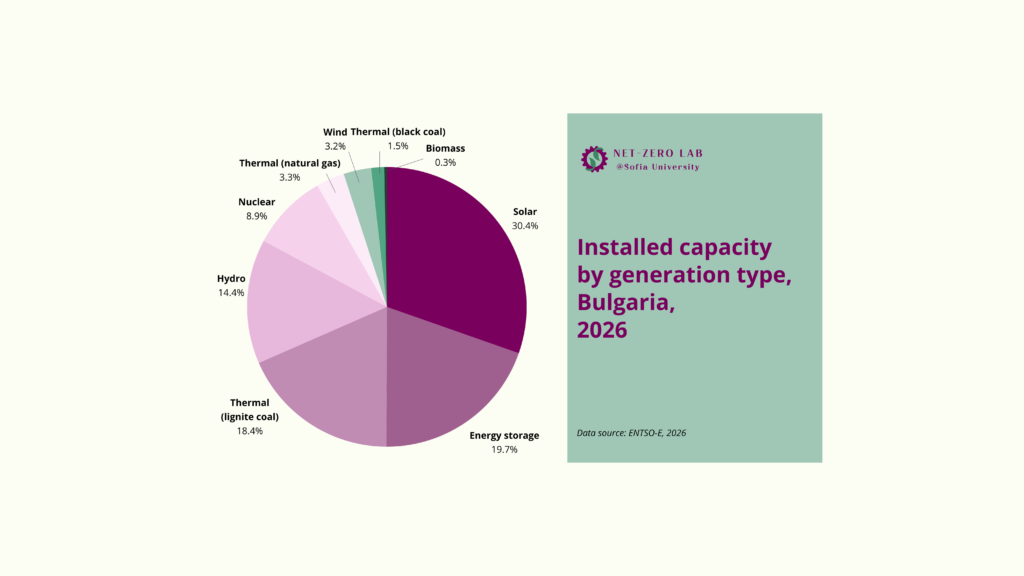
At the beginning of this summer, in June 2026, EU Member State energy ministers, battery developers and manufacturers, representatives of the renewable energy sector, and financial institutions signed the first EU-level Tripartite Agreement on Energy Storage. The agreement calls on participating Member States to submit concrete national pledges for additional energy-storage deployment during 2026–2028. Its …

Bulgaria’s BESS Boom: Already Ahead of Its 2026–2028 Storage Pledge?  Read More »
How much battery storage does Europe have and where does Bulgaria stand? 

The expansion of variable renewable electricity generation is reshaping the European power system. In 2025, wind and solar generation across the European Union (EU) amounted to approximately 845 TWh, representing a 56% increase compared with 2020. Solar contributed roughly 366 TWh, while wind power delivered 479 TWh, collectively accounting for approximately 30% of total EU …

How much battery storage does Europe have and where does Bulgaria stand?  Read More »

Why the electricity we have is not always the electricity we need 

An electricity system can be planned remarkably far in advance. Generators schedule their output, consumers’ expected demand is forecast, electricity is traded across borders and market participants establish positions hours or even days before the electricity is actually delivered.  But the grid does not operate according to those plans. This summer, the gap between planning …

Why the electricity we have is not always the electricity we need  Read More »

Six regions, one shared ambition: VIVA launches to strengthen European innovation

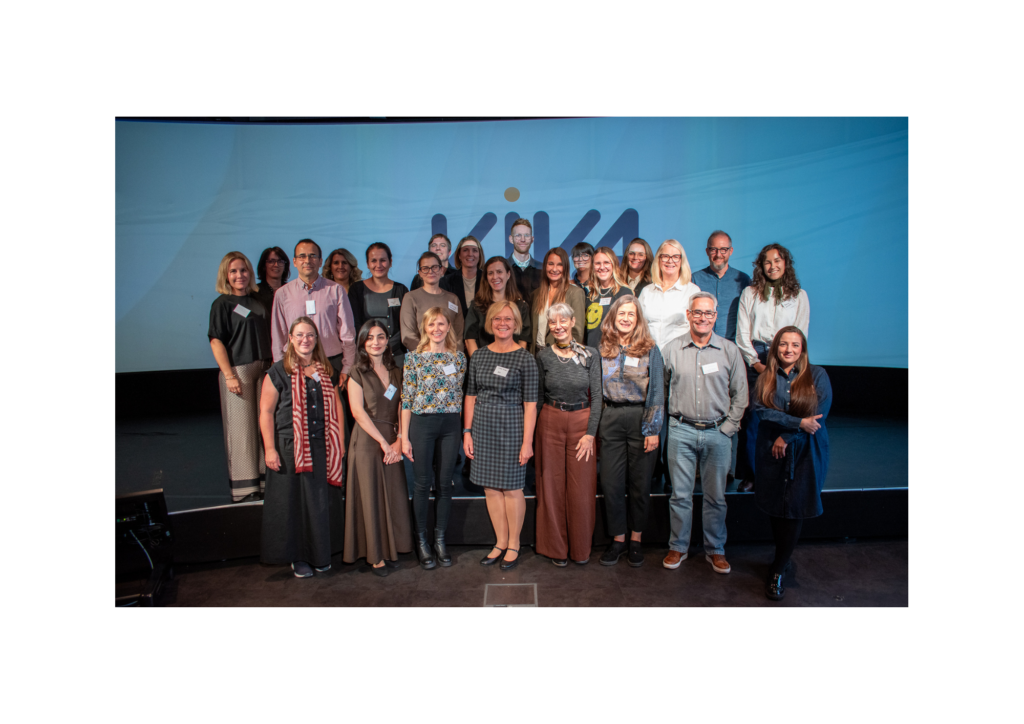
Six regions across Northern and Eastern Europe are joining forces through VIVA to help promising innovations move towards implementation and scale, while opening new pathways for knowledge, expertise and opportunities to travel across regional borders. The four-year Horizon Europe initiative has officially launched, bringing its consortium together in Halden, Norway, on 15–16 September 2026 to …

Six regions, one shared ambition: VIVA launches to strengthen European innovation Read More »

The Coal Gap and its implications for Bulgaria 

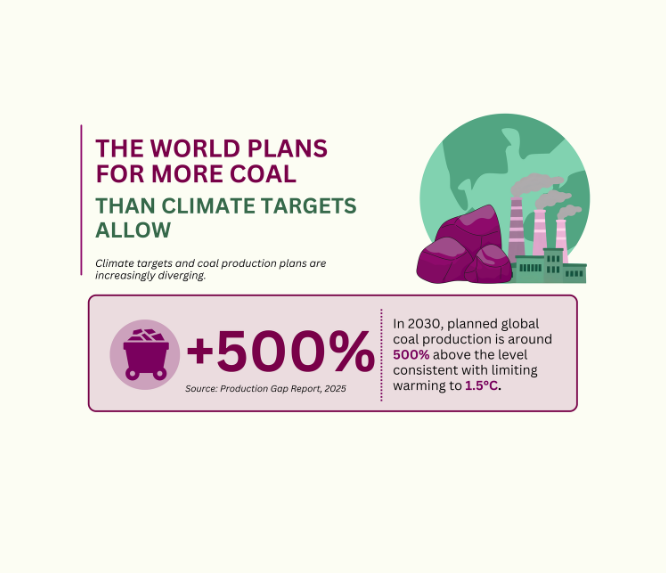
Despite increasingly ambitious climate commitments, projected coal production worldwide remains far above the levels consistent with international climate goals. This mismatch, known as the coal gap, is derived from the broader production gap framework and highlights the challenge of aligning coal production with pathways that limit global warming to well below 2°C and pursue efforts to keep it within 1.5°C. The 2025 Production …

The Coal Gap and its implications for Bulgaria  Read More »

Is natural gas really a “bridge fuel” for Bulgaria, or does it primarily expose the country to price volatility originating from European gas markets? 

Natural gas has long been presented as the fuel that could bridge Europe’s transition from coal to a low-carbon electricity system. Compared with coal, it produces fewer carbon dioxide emissions, gas-fired power plants provide the flexibility needed to balance increasingly variable renewable generation, and Europe entered the energy transition with an extensive gas transmission and …

Is natural gas really a “bridge fuel” for Bulgaria, or does it primarily expose the country to price volatility originating from European gas markets?  Read More »

Does Renewable Energy Drive Decarbonization? Bulgaria’s Performance in the EU Context (2015–2024) 

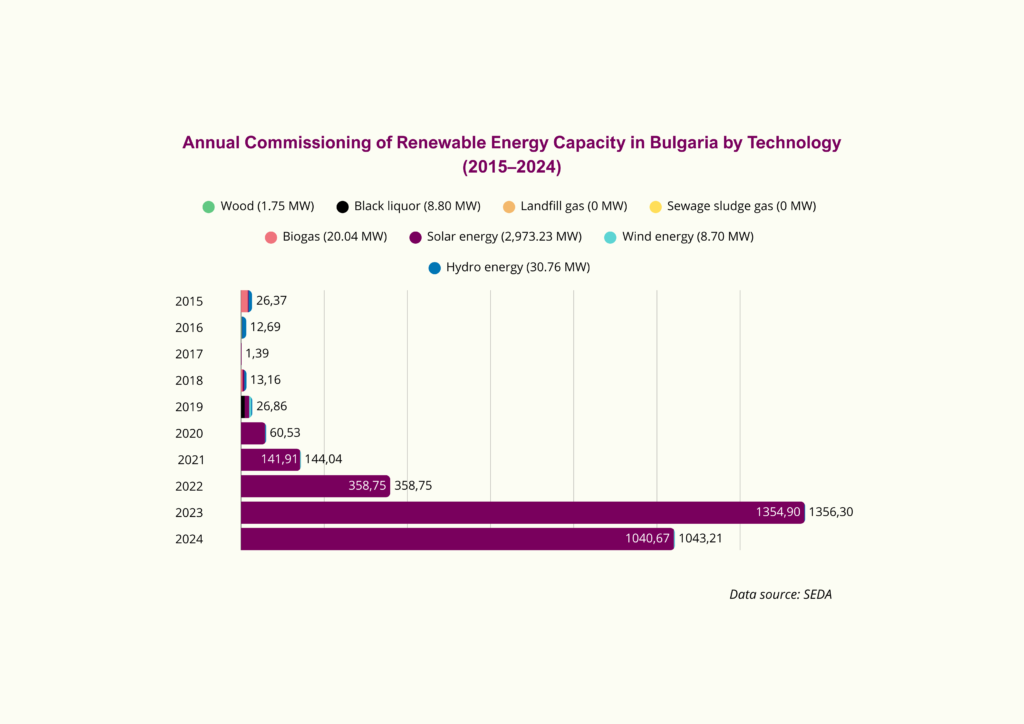
The transformation of the European Union’s power sector over the last decade has been driven by two interconnected processes: the expansion of renewable energy sources (RES) and the reduction of carbon-intensive electricity generation. While these developments are often discussed together, an important question remains: to what extent can the decline in carbon intensity be attributed to …

Does Renewable Energy Drive Decarbonization? Bulgaria’s Performance in the EU Context (2015–2024)  Read More »

Is Bulgaria’s Electricity Too Carbon-Intensive? A European Comparison 

In the context of accelerating climate change and increasingly stringent environmental policies, carbon intensity has become a key indicator for assessing the environmental performance of energy systems. It is commonly defined as the amount of carbon dioxide (CO₂) emitted per unit of electricity generated, typically expressed in grams of CO₂ per kilowatt–hour (gCO₂/kWh). This metric …

Is Bulgaria’s Electricity Too Carbon-Intensive? A European Comparison  Read More »

How does the merit order determine electricity prices in Bulgaria and where does it break down? 

The Merit Order Explained  Competitive electricity markets operate according to a fundamental principle known as the merit order, which determines the sequence in which power plants are dispatched to meet electricity demand. In this framework, generators such as coal, nuclear, wind, and solar plants submit offers to sell electricity, specifying both the quantity they can supply and the price at which …

How does the merit order determine electricity prices in Bulgaria and where does it break down?  Read More »

Scroll to Top