
Transforming Energy. Industry. Society.
Translating Climate Neutrality Targets into Knowledge-Based Realities


The Net-Zero Lab is a unit established at the Faculty of Economics and Business Administration of Sofia University “St. Kliment Ohridski”. It is committed to providing actionable knowledge on how to effectively translate climate-neutrality targets into tangible actions, driving evidence-based and just sustainable transformation in Bulgaria and the region.
Our Team

Assoc. Prof. Dr. Mariya Trifonova
Director of the Net-zero Lab
She has 12+ years of experience in renewable energy, specializing in participatory processes for transitioning coal regions in Bulgaria and modeling decarbonization pathways.

Assoc. Prof. Dr. Atanas Georgiev
Deputy Director of the Net-zero Lab
Dean, Head of the Department “Industrial Economics and Management ” and Director of the Master’s program “Energy Markets and Services” at the Faculty of Economics and Business Administration, Sofia University “St. Kliment Ohridski”

Lyubimka Georgieva
Research Assistant in Citizens Energy
She specializes in the energy sector with a focus on renewable energy, active citizen engagement, and women empowerment in green transformation. She also has expertise in data modeling and analysis.

Bozhil Kondev
Reserach Fellow
Bozhil Kondev is an energy and climate change expert and his research focuses on climate risks for the energy transition and sustainable finance. Alongside his work at the lab, Bozhil is involved as an independent energy expert in several technical assistance projects of international financial institutions in Eastern Europe, Asia and Africa.

Maya Todorova
Project Coordinator
She focuses on improving work processes, ensuring clear communication, and handling administrative tasks. With experience in data analysis and using AI tools to help make everyday operations more efficient and effective.

Remina Aleksieva
Reserach Fellow
Remina Aleksieva holds a master’s degree in international public policy and a master’s degree in law (due in 2026). She has experience in the non-governmental and research sectors and works in the field of energy and climate policy. Her main research focus is on renewable energy, citizen engagement and energy and climate legal and regulatory compliance.

Nursen Syuleyman
Research Assistant
She is actively involved in various research projects, gathering and analyzing data to support project objectives. By applying advanced methodologies, she ensures both precision and efficiency. Her contributions, ranging from creative ideas to strategic planning, are essential for driving success and optimizing results.

Mihail Georgiev
Research Fellow Industrial Decarbonisation
Mihail Georgiev is a chemical engineer (UCTM) and holds a PhD in
Physicochemistry (Sofia University). He is a member of the Royal Society
of Chemistry. With a track record of over 30 scientific projects, he has
collaborated with global industry leaders, including Unilever, Lonza,
Sasol, and KLK Oleo. His expertise focuses on problem-solving that
bridges fundamental science with sustainable industrial efficacy. Mihail
is actively working on decarbonization, sustainability, and air
purification systems through physicochemical innovation and advanced
characterization techniques.
Expertise
Techno–economic assessments
of technological solutions in the energy and industry sectors necessary to meet the Net-Zero target
Decision-support tools
such as energy system simulation and optimization, regional technology roadmaps for the sustainable transformation, life cycle carbon assessments
Applied research for societal transformation
- assessing human resource needs for a sustainable future
- fostering social partnerships
- empowering individuals and communities to drive meaningful change
Publications
National Joint Assessment of Vulnerabilities to and Impacts of Climate Change in Bulgaria
Scaling up Electricity System Flexibility in Bulgaria through Digital Solution
Trajectories of Institutional Change in the Energy Transition: Institutions, Actors, and Policies
The Bulgarian Chemical Industry: Carbon Footprint, Resource Dependencies, and Regulatory Challenges
Analysis of Available Financial Mechanisms in Support of Energy Communities
Raw Materials, Critical Choices – The Backbone of Bulgaria’s Low-Carbon Future
Research and Innovation in Support of Energy Technologies – Opportunities and Challenges for Bulgaria
News
- Bulgaria’s BESS Boom: Already Ahead of Its 2026–2028 Storage Pledge? At the beginning of this summer, in June 2026, EU Member State energy ministers, battery developers and manufacturers, representatives of the renewable energy sector, and financial institutions signed the first EU-level Tripartite Agreement on Energy Storage. The agreement calls on participating Member States to submit concrete national pledges for additional energy-storage deployment during 2026–2028. Its …
Bulgaria’s BESS Boom: Already Ahead of Its 2026–2028 Storage Pledge? Read More »
- How much battery storage does Europe have and where does Bulgaria stand? The expansion of variable renewable electricity generation is reshaping the European power system. In 2025, wind and solar generation across the European Union (EU) amounted to approximately 845 TWh, representing a 56% increase compared with 2020. Solar contributed roughly 366 TWh, while wind power delivered 479 TWh, collectively accounting for approximately 30% of total EU …
How much battery storage does Europe have and where does Bulgaria stand? Read More »
- The shadow of the duck: can Bulgaria keep up with its solar boom? For decades, Bulgaria’s grid followed the rhythm of its consumers: demand rose in the morning, eased overnight, and hydro helped the system follow these changes around a largely steady nuclear and thermal backbone. Now a second rhythm is shaping the grid – the rise and fall of the sun. Solar generation has grown from a …
The shadow of the duck: can Bulgaria keep up with its solar boom? Read More »
- Why the electricity we have is not always the electricity we need An electricity system can be planned remarkably far in advance. Generators schedule their output, consumers’ expected demand is forecast, electricity is traded across borders and market participants establish positions hours or even days before the electricity is actually delivered. But the grid does not operate according to those plans. This summer, the gap between planning …
Why the electricity we have is not always the electricity we need Read More »
- Six regions, one shared ambition: VIVA launches to strengthen European innovation
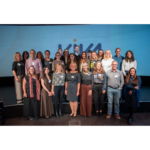 Six regions across Northern and Eastern Europe are joining forces through VIVA to help promising innovations move towards implementation and scale, while opening new pathways for knowledge, expertise and opportunities to travel across regional borders. The four-year Horizon Europe initiative has officially launched, bringing its consortium together in Halden, Norway, on 15–16 September 2026 to …
Six regions, one shared ambition: VIVA launches to strengthen European innovation Read More »
Partners


Collaboration drives innovation towards a sustainable future.
We recognize the critical role of the private sector in advancing net-zero initiatives, inviting businesses to join us in fostering regional clean energy markets, transforming industrial processes, and enhancing supply chain sustainability.
The Net Zero lab opens its doors for businesses to engage in strategic partnerships within our areas of expertise. We believe in the power of technology transfer and upscaling to achieve net-zero targets. By facilitating collaboration, we aim to drive the growth of sustainable practices.
Our focus on cluster-based decarbonization is a key aspect. Through the “Partner with Us” program, businesses can actively contribute to the development and execution of these strategies. This collaborative approach ensures a holistic transformation of industries, paving the way for a resilient, low-carbon future.
Partner with us to make a lasting impact on innovation, clean energy, and sustainable industrial and societal practices. Together, we can build a greener, more resilient tomorrow.
Contact
Net-Zero Lab at Faculty of Economics and Business Administration Sofia University St. Kliment Ohridski
1113 Sofia, 125 Tsarigradsko Shose Blvd., bl.3
netzero@feb.uni-sofia.bg

