Uncategorized

Net-Zero Lab’s Team Participates in the 6th SEE SDEWES Conference in Burgas

The 6th South East European Conference on Sustainable Development of Energy, Water and Environment Systems – SEE SDEWES 2026 – officially opened in Burgas, Bulgaria this year. The international forum is held in cooperation with the Faculty of Economics and Business Administration at Sofia University “St. Kliment Ohridski” and the Burgas Branch of Sofia University. …

Net-Zero Lab’s Team Participates in the 6th SEE SDEWES Conference in Burgas Read More »

Is Bulgaria’s Electricity Too Carbon-Intensive? A European Comparison 

In the context of accelerating climate change and increasingly stringent environmental policies, carbon intensity has become a key indicator for assessing the environmental performance of energy systems. It is commonly defined as the amount of carbon dioxide (CO₂) emitted per unit of electricity generated, typically expressed in grams of CO₂ per kilowatt–hour (gCO₂/kWh). This metric …

Is Bulgaria’s Electricity Too Carbon-Intensive? A European Comparison  Read More »

How does the merit order determine electricity prices in Bulgaria and where does it break down? 

The Merit Order Explained  Competitive electricity markets operate according to a fundamental principle known as the merit order, which determines the sequence in which power plants are dispatched to meet electricity demand. In this framework, generators such as coal, nuclear, wind, and solar plants submit offers to sell electricity, specifying both the quantity they can supply and the price at which …

How does the merit order determine electricity prices in Bulgaria and where does it break down?  Read More »

Electricity System Flexibility in Bulgaria: Unlocking the Digital Opportunity 

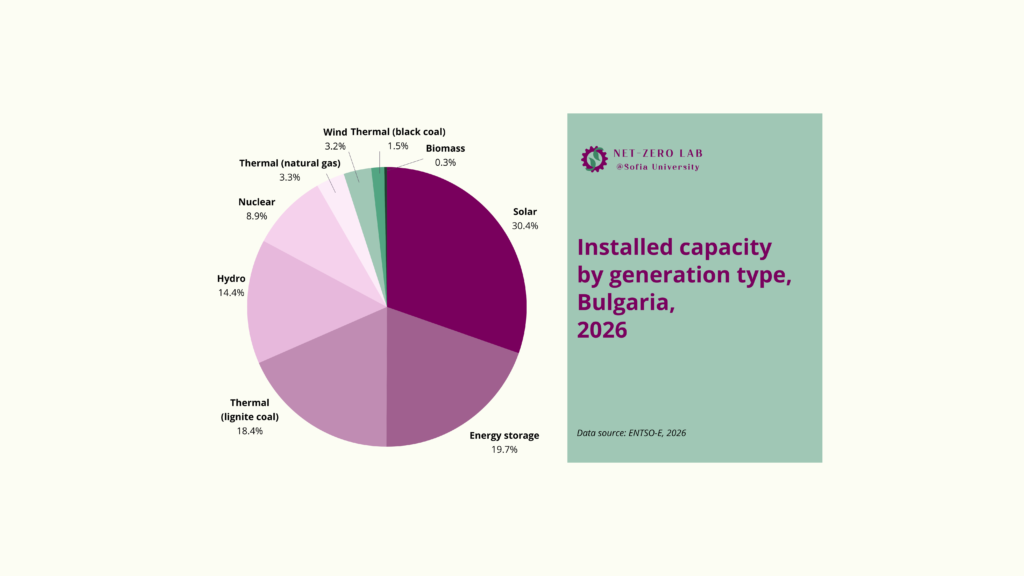
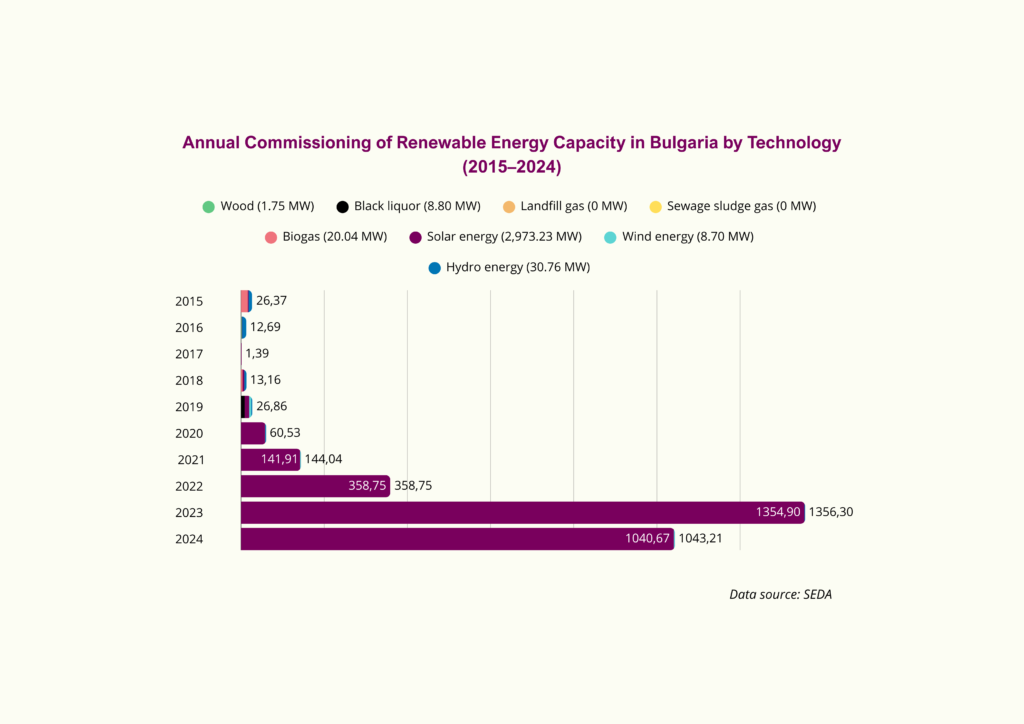
Bulgaria’s electricity system is under mounting pressure. Renewables now account for 54.5% of installed generation capacity, solar PV alone reached 6,505 MW in 2026, and the system is already producing sustained periods of negative wholesale prices — clear evidence that the flexibility challenge is no longer a future concern but a present operational reality. On a typical spring day, …

Electricity System Flexibility in Bulgaria: Unlocking the Digital Opportunity  Read More »

When Prices Diverge: Welfare Losses from Constrained Cross-Border Transmission  in Southeast Europe 

The European integration of electricity markets rests on the principle that power should flow from low-price to high-price zones, up to the limit of available transmission capacity. While European electricity market integration has progressed significantly under the EU Target Model, persistent price divergence and intermittent inefficiencies in cross-border flows suggest that full market coupling has not …

When Prices Diverge: Welfare Losses from Constrained Cross-Border Transmission  in Southeast Europe  Read More »

Are Bulgaria’s wholesale electricity prices isolated? 

The integration of European electricity markets is found on the principle that, in the absence of transmission constraints, wholesale electricity prices across bidding zones should converge. Under the EU Target Model and the market coupling framework promoted by the European Commission, cross-border capacity is allocated implicitly through price coupling, allowing electricity to flow from lower-price to higher-price areas until …

Are Bulgaria’s wholesale electricity prices isolated?  Read More »

More renewables = lower prices. But not more stable prices. 

The increasing penetration of renewable energy sources (RES) in European electricity markets is commonly associated with lower wholesale prices. However, its implications for price stability remain ambiguous. Evidence from Bulgaria for 2025 indicates that while a higher RES share systematically reduces average day-ahead wholesale prices, it does not lead to lower price volatility; rather, it is associated with increased short-term price …

More renewables = lower prices. But not more stable prices.  Read More »

Why Is Electricity More Expensive in Bulgaria and Its Neighbours?  

Over the past two years, wholesale electricity prices in Bulgaria and the wider South-Eastern European region have consistently been higher than in Central Europe. Net-Zero Lab has already analyzed the price divergence in 2025 (link). Many observers ask: Is the EU’s new flow-based market coupling system to blame?  The data tell a more complex — and more interesting — …

Why Is Electricity More Expensive in Bulgaria and Its Neighbours?   Read More »

Bulgaria vs. EU: Where Do Wholesale Power Prices Stand? 

A comparison of day-ahead electricity prices across Europe for the whole of 2025 reveals a clear and persistent pattern: electricity prices in Bulgaria paid by non-household users are most often above the EU average, with deviations becoming especially pronounced during periods of system stress and, occasionally, during periods of oversupply.  Evidence of the latter occurred on 1st May …

Bulgaria vs. EU: Where Do Wholesale Power Prices Stand?  Read More »

Co-Creating Industrial Decarbonisation: Turning European Ambition into National and Industrial Priority 

Industrial decarbonisation is key to achieving the EU’s climate objectives, with the next decade representing a critical window for the rapid reduction of emissions from carbon-intensive industries. Against the backdrop of deepening structural challenges in energy-intensive sectors, the low-carbon transition is becoming not only a climate imperative but also a decisive factor for the long-term competitiveness and technological …

Co-Creating Industrial Decarbonisation: Turning European Ambition into National and Industrial Priority  Read More »

Scroll to Top