
REPORT METHODOLOGY
How do we understand a climate future that cannot be predicted with certainty?
Climate projections are not forecasts of tomorrow’s weather. They explore possible futures under different assumptions about society, emissions and the climate system.
SCROLL TO EXPLORE ↓
01 / FORECAST ≠ PROJECTION
Weather tells us what may happen tomorrow.
Climate explores what could happen over decades.
The further we look into the future, the more the outcome depends on assumptions, scenarios and the behaviour of the climate system.
TOMORROW
DECADES
CENTURY
02 / UNCERTAINTY
Why is the future uncertain?
01
Future influences
Future human activity and natural influences cannot be known with certainty.
02
Climate models
Our understanding of the climate system is incomplete and models necessarily simplify reality.
03
Natural variability
The climate system contains its own internal variability, independent of long-term forcing.
03 / POSSIBLE FUTURES
One planet. Multiple pathways.
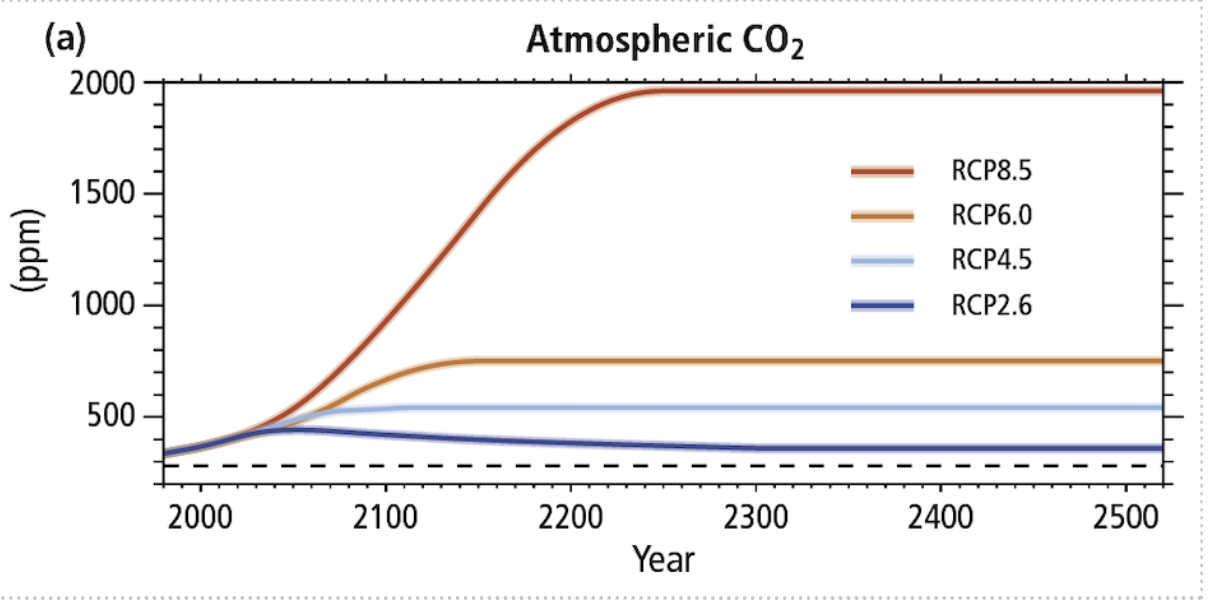
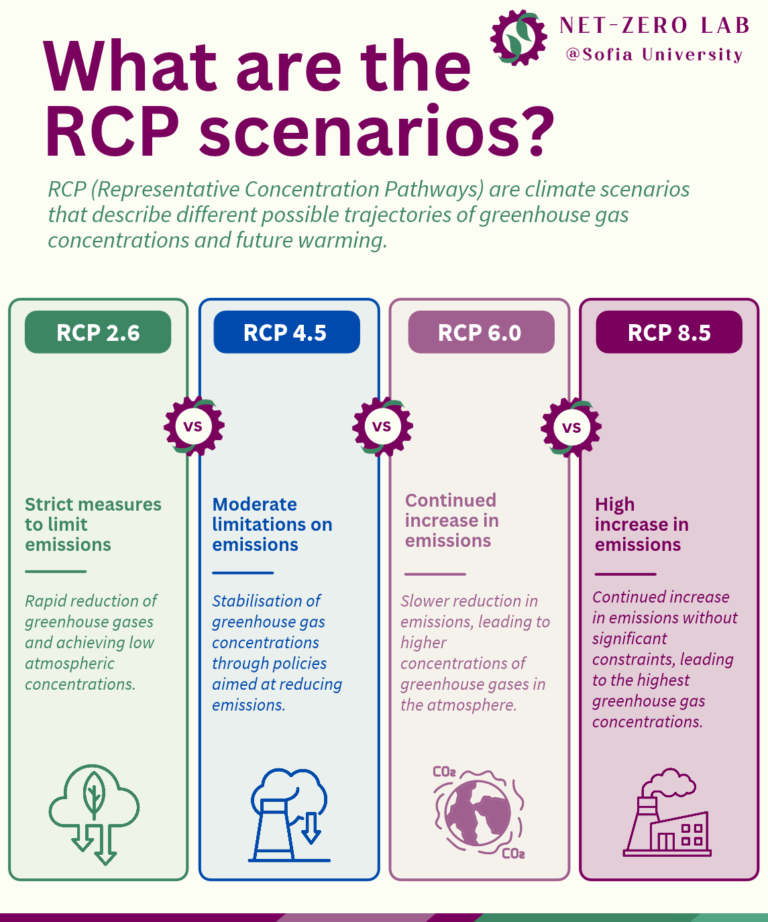
Representative Concentration Pathways — RCPs — describe alternative trajectories for future greenhouse-gas concentrations and their effects on the climate system.
04 / WHAT SHAPES A SCENARIO?
Climate pathways begin with choices.
01
Population
Global and regional population change
02
Economic development
Growth, urbanisation and industrialisation
03
Energy use
Energy demand, renewables and fossil-fuel dependence
04
Land use
Forests, grasslands and agricultural land
RCP SCENARIO
05 / FROM SCENARIOS TO IMPACTS
Five approaches. One integrated assessment.
01
Regional climate modelling
02
Statistical analysis
Statistical analysis
03
Remote sensing
04
Systematic evidence review
Metadata and meta-analysis
05
Official statistics
Integration of authoritative data sources
06 / THE RANGE
Two scenarios frame the assessment.
RCP4.5
MODERATE WARMING
A pathway used to represent a more moderate trajectory of future warming.
RCP8.5
INTENSIVE WARMING
A pathway representing a substantially more intensive warming trajectory.
07 / FROM SCIENCE TO DECISIONS
The purpose is not to predict one future.
It is to prepare for many possible futures.
The assessment provides a scientific and analytical foundation for climate-adaptation policy at national and regional level.
Continue exploring the assessment.
 English
  Bulgarian